

Great Migration
One of the most remarkable natural events on Earth — over two million animals moving across Tanzania and Kenya in a constant, circular journey.
The Great Wildebeest Migration is one of the most remarkable natural events on Earth, involving the movement of over two million animals across the plains of Tanzania and Kenya in a constant, circular journey. Each year, vast herds of wildebeest, accompanied by zebras, gazelles, and other antelopes, migrate across the Serengeti-Mara ecosystem in search of fresh grass and water, following seasonal rainfall patterns. This epic journey begins in the southern Serengeti, where calving takes place between January and March. During this period, thousands of calves are born every day, attracting numerous predators such as lions, cheetahs, and hyenas.
As the dry season approaches in April, the herds start moving northwest toward the Grumeti River, eventually reaching the Mara River by July. The river crossing is the most dramatic and dangerous phase of the migration, as animals plunge into crocodile-infested waters in a desperate bid to reach the Maasai Mara in Kenya. Many do not survive, falling prey to predators or drowning in the swift currents. After feeding on the lush grasslands of the Mara, the herds begin their journey back south around October, completing the migration cycle.
This incredible movement is not only a story of survival but also a key part of the ecological balance in the region. The migration supports a wide variety of wildlife and attracts thousands of tourists, playing a vital role in local economies and conservation efforts. The wildebeest migration is truly a living, moving wonder of the natural world, showcasing the resilience and interconnectedness of life on the African savanna.

The Migration Year
The Great Wildebeest Migration is a continuous, year-round cycle driven by the search for fresh grazing and water, but it follows a distinct seasonal pattern marked by major events.
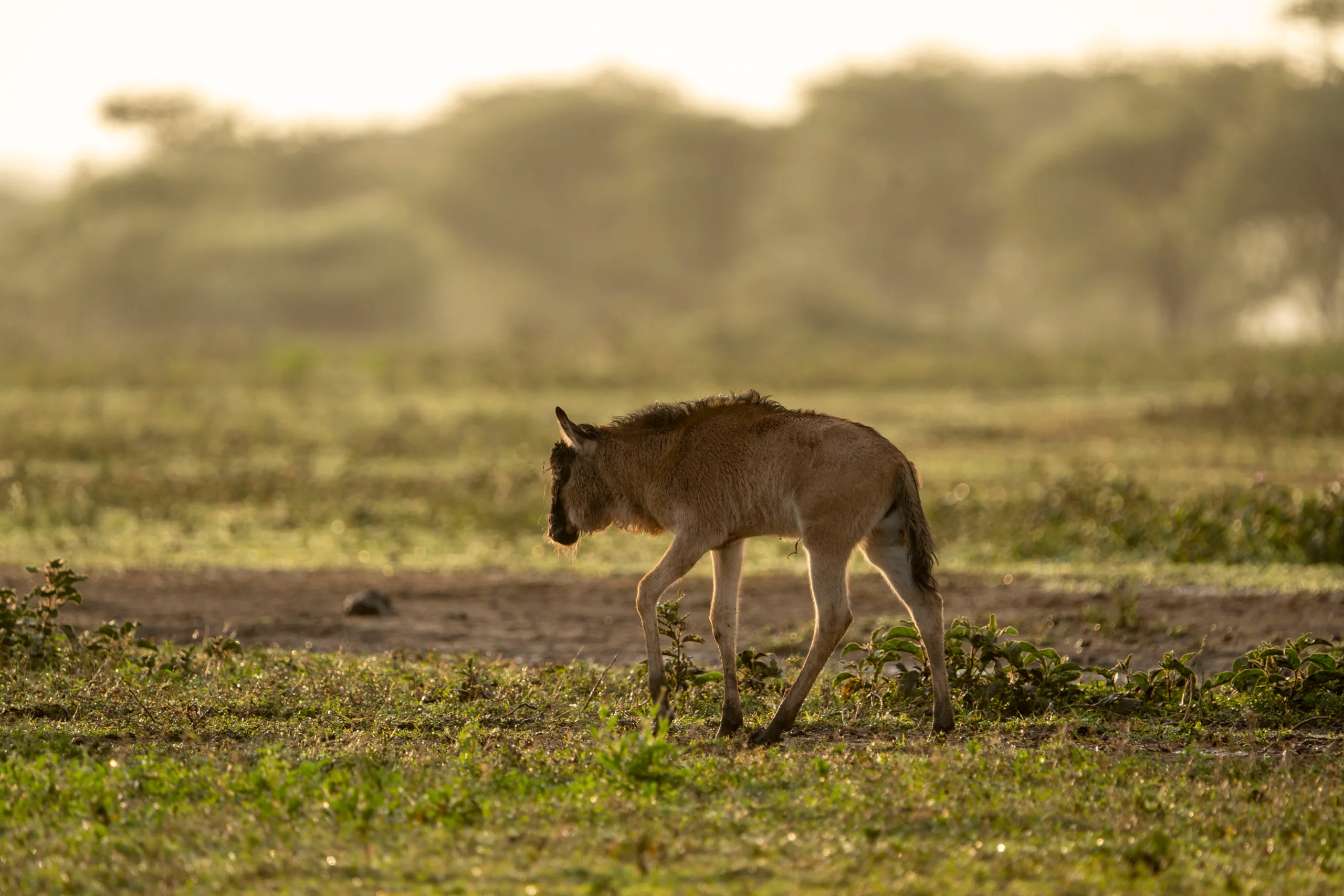
Calving season
Southern Serengeti · Ngorongoro Conservation AreaThe herds gather in the southern Serengeti, particularly in the Ngorongoro Conservation Area, for the calving season. During this time, over 500,000 calves are born in just a few weeks, providing a feast for predators like lions and hyenas.

The long journey northwest
Towards the Grumeti RiverAs the rains end and water becomes scarce, the herds begin their long journey northwest, moving toward the Grumeti River.

The Mara River crossing
Northern Serengeti · Maasai MaraThe migration reaches its most dramatic phase as the wildebeest attempt the perilous Mara River crossing into Kenya's Maasai Mara. Many animals die here due to strong currents or attacks by waiting crocodiles.

The return south
Back to the southern SerengetiAfter grazing in the Mara, the herds gradually begin their return to the southern Serengeti, following the onset of the short rains, thus completing the migration cycle and starting it anew.
↻ And then the cycle begins again with the next calving season.

Reason For The Migration
Driven primarily by the search for fresh grazing and water.
The Great Wildebeest Migration is one of nature’s most remarkable events, driven primarily by the search for fresh grazing and water. Each year, over 1.5 million wildebeest, accompanied by hundreds of thousands of zebras and gazelles, travel in a circular route between Tanzania’s Serengeti and Kenya’s Maasai Mara. This migration is triggered by seasonal rains, as the animals instinctively move toward areas with abundant grasslands and reliable water sources.
The migration is a survival strategy, ensuring that the herds can access enough food throughout the year while also giving birth in safer, nutrient-rich environments. This journey is not only essential for their survival but also supports the broader ecosystem by shaping predator-prey dynamics and maintaining the health of the savannah.
Who Travels, Who Hunts, and Why It Matters
 1.5–2M wildebeest
Animals Involved
The Great Wildebeest Migration involves a massive movement of animals across the Serengeti-Mara ecosystem, with approximately 1.5 to 2 million wildebeest leading the journey. Alongside them are around 200,000 zebras, which often travel at the front of the herds, using their keen eyesight to spot predators. Joining this vast procession are tens of thousands of Thomson’s and Grant’s gazelles, as well as elands and other species of antelope. These animals form a diverse and interdependent migratory group, each playing a role in the survival and movement of the herds as they navigate the challenges of the East African plains.
 Lions · Cheetahs · Crocodiles
Predators
Throughout the Great Wildebeest Migration, the herds are closely followed by a range of formidable predators that rely on this annual movement for survival. Lions, cheetahs, hyenas, and leopards stalk the herds across the plains, especially during the calving season when vulnerable newborns are easy targets. One of the most perilous moments of the migration occurs at the river crossings, particularly the Mara and Grumeti Rivers, where Nile crocodiles lie in wait beneath the surface. These crossings become scenes of intense struggle, as thousands of wildebeest risk their lives to reach the other side, many falling prey to the powerful jaws of these stealthy reptiles. Predation plays a crucial role in maintaining the balance of this dynamic ecosystem.
 A living ecosystem
Circle of Life
The Great Wildebeest Migration is a vital part of the circle of life in the Serengeti-Mara ecosystem, supporting and sustaining a wide range of species and natural processes. As the herds graze, their movement helps stimulate grass regrowth by naturally trimming vegetation and enriching the soil through their droppings, acting as a form of fertilization. This constant cycle of grazing and regrowth maintains the health of the savanna. The migration also reinforces predator-prey dynamics, providing a reliable food source for predators such as lions, hyenas, and crocodiles, which in turn helps regulate animal populations and maintain ecological balance. Additionally, the migration attracts thousands of tourists from around the world, generating significant tourism income that plays a crucial role in funding wildlife conservation efforts, supporting local communities, and preserving this extraordinary natural spectacle for future generations.